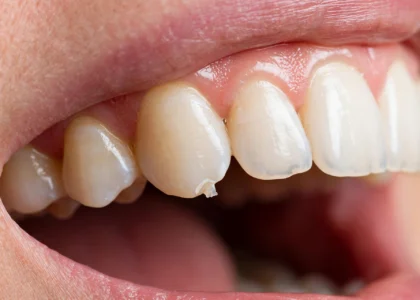

A toothache worse at night is one of the most miserable experiences in dentistry. The tooth that only twinged during the day starts throbbing the moment your head hits the pillow, and by 2 AM you are wide awake, pacing the kitchen and wondering how a single tooth can hurt this much. You are not imagining it – there are real reasons a toothache worse at night feels so much more intense than the same tooth did at noon. This guide explains why nighttime tooth pain spikes, five proven ways to ease a toothache worse at night until morning, what not to do at 2 AM, and when a toothache worse at night means you should call your dentist first thing in the morning.
Why a Toothache Gets Worse at Night
Three things change when you go to bed, and all three make dental pain louder. Understanding them is also the key to getting relief, because each one has a counter-move.
When you lie flat, blood flow to your head increases. More blood reaching an inflamed tooth means more pressure inside the tooth, and that pressure is exactly what your nerves read as throbbing pain. Sitting or standing during the day keeps that pressure lower, which is why the same tooth can feel manageable at your desk and unbearable in bed.
During the day your brain is busy – work, conversation, errands – and pain signals compete with everything else for attention. At night, in a dark quiet room, nothing competes, so the pain fills the whole frame. On top of that, your body’s cortisol levels naturally dip overnight, and cortisol is one of the chemicals that dulls inflammation. Less cortisol means the inflammation around the tooth gets a louder voice at exactly the moment you are trying to sleep.
Two smaller contributors to a toothache worse at night are worth knowing. A very warm bedroom can increase blood flow the same way lying flat does, and many people clench or grind their teeth in their sleep without realizing it, which pounds an already irritated tooth for hours. If you regularly wake up with a sore jaw along with the toothache, mention it at your visit.
5 Proven Ways to Ease a Toothache Worse at Night
Nothing here replaces a dental visit, but these five steps can take the edge off a toothache worse at night until the office opens. They are the same first-aid measures dentists recommend for after-hours tooth pain.
1. Sleep Propped Up, Not Flat
Prop yourself up with two or three pillows so your head stays above your heart. It feels strange, but it directly counters the blood-flow problem: less pressure reaching the tooth means less throbbing. A recliner works even better if you have one. Even a slight incline is better than lying completely flat.
2. Use a Cold Compress on Your Cheek
Hold a cold compress, or a bag of ice wrapped in a cloth, against the outside of your cheek for 10 to 15 minutes at a time, with breaks in between. The cold numbs the area and constricts blood vessels, which calms both pain and swelling. Do not place ice directly on your skin, and do not fall asleep with the compress on.
3. Rinse Gently With Warm Salt Water
Dissolve about half a teaspoon of salt in a glass of warm water and rinse gently for 30 seconds, then spit. It will not fix the tooth, but it cleans the area around it and can soothe irritated gums. Keep the swishing gentle – vigorous rinsing can aggravate an already angry tooth.
4. Take an Over-the-Counter Pain Reliever as Directed
Anti-inflammatory pain relievers are usually the most effective option for dental pain because they target the inflammation driving it. Follow the package directions exactly and do not combine products without checking first. If you take prescription medications or have a medical condition, ask your pharmacist or doctor which option is safe for you before taking anything.
5. Gently Floss Around the Aching Tooth
Sometimes a “toothache” is food wedged hard between two teeth, pressing on the gum all night. Gently slide floss on both sides of the aching tooth to clear anything trapped – the same first-aid step the American Dental Association recommends for toothaches. If the pain eases afterward, you may have found your culprit. Still mention it at your visit, because food that keeps getting trapped often means a gap or a failing filling worth checking.
What NOT to Do at 2 AM
Desperation makes bad ideas tempting. A few firm rules for a toothache worse at night:
- Do not put aspirin, or any crushed painkiller, on the aching tooth or gums. It does not absorb into the tooth, and it can burn the gum tissue – the ADA specifically warns against it.
- Skip the heating pad. Heat draws more blood to the area, which is the opposite of what a throbbing tooth needs. Cold is the right call for dental pain.
- Do not chew on that side to “test” whether the tooth still works. You will only irritate it further.
- You will read about clove oil online. It can numb the area briefly, but it can also irritate the gums and it never treats the cause. Use it only if you already know you tolerate it, and still call in the morning.
When a Toothache Worse at Night Cannot Wait Until Morning
Most nighttime toothaches can wait until morning. A toothache worse at night that comes with any of the following should be treated as urgent – call first thing, or sooner:
- Severe, throbbing pain that does not ease with an over-the-counter pain reliever
- Swelling in the face, cheek, or jaw, or a fever – these can signal an infection that is spreading
- Pain after a blow to the mouth, a fall, or a visibly cracked tooth
- A toothache that repeatedly wakes you from sleep, or pain that has lasted more than a day or two
DNTL SPOT keeps emergency slots open for situations like this. If you are unsure whether your toothache qualifies, our emergency dental care team can talk you through it by phone.
What Your Dentist Will Look For
A toothache worse at night often points to the tooth’s nerve. The most common causes your dentist will check: a deep cavity or a failing filling pressing on the pulp, a cracked tooth, gum infection, or pulp inflammation that may need a root canal. Throbbing pain that spikes when you lie down is a classic sign the pulp is involved, and the sooner it is evaluated, the more treatment options you have – a small cavity caught early may only need a tooth-colored filling, while a neglected one can become a much bigger procedure.
Your dentist will take an x-ray first to see what is happening inside the tooth, since the real problem is often deeper than what you can feel. The pattern of a toothache worse at night is useful diagnostic information, so mention exactly when the pain is worst and what eases it.
The Bottom Line
A toothache worse at night feels cruel, but it follows simple physics: lying flat raises pressure inside an inflamed tooth, and a quiet dark room gives pain your full attention. Prop yourself up, use cold, rinse gently, take a pain reliever as directed, and floss the area. Then call in the morning. If it is daytime right now, skip the wait – our office is open today until 5 PM, and a toothache that kept you up all night deserves to be seen today. Call DNTL SPOT at (516) 226-9160 and we will get you in.
Or call (516) 226-9160 – Mon & Wed 9 AM–5 PM, Sun 9 AM–3 PM