
Quiet, tooth-colored repairs that blend in — and sealants that stop cavities before they start.
Tooth-colored fillings repair a tooth damaged by decay, and sealants stop decay starting in the first place. At DNTL SPOT in Hewlett, NY, Dr. Inessa Murdakhayeva and Dr. Regina Murdakhayeva place composite fillings that bond to the tooth and match your natural shade — no amalgam, and no silver line when you laugh.
Tooth sensitive, or a filling come out? Call (516) 226-9160. Small problems are quick and inexpensive to fix; the same problem in six months often is not.
On this page
The sooner a cavity is treated, the less tooth we have to touch.
An itemized estimate with your insurance applied, before treatment starts.
Dr. Inessa and Dr. Regina treat you themselves, start to finish.
Decay is a bacterial process rather than bad luck. Bacteria in plaque turn sugars into acid, the acid dissolves minerals out of the enamel, and once that breaks through into the softer dentine underneath it accelerates. Tooth-colored fillings remove the decayed tissue and rebuild what was lost.
Not every dark spot needs drilling. Very early demineralization — a white or brown spot that has not yet cavitated — can often be remineralized with fluoride and better cleaning. We monitor those rather than fill them, because the smallest restoration is still larger than none at all.
We place tooth-colored fillings made of composite: a resin and glass-particle material that bonds chemically to the tooth. Two things follow from that bond. The first is cosmetic — it is shaded to your tooth and is essentially invisible. The second matters more clinically: because it bonds, the cavity can be cut to the shape of the decay rather than cut into a mechanical shape that holds a filling in. That means keeping more healthy tooth.
Amalgam, the silver material, is durable and has served for well over a century. It is not poisonous at the doses involved, and if you have amalgam fillings that are sound there is no health reason to replace them — removing a working restoration does more harm than leaving it alone. But amalgam does not bond, so it needs undercuts cut into sound tooth to stay put, it expands and contracts with temperature in a way that contributes to cracks over decades, and it is gray. We do not place it.
Glass ionomer releases fluoride and is useful at the gum line and in children’s teeth, though it is weaker under chewing load. The American Dental Association has a neutral comparison of the materials if you want to read further before deciding.
Noticed a twinge on something sweet or cold?
Small cavities are quick to fix. Waiting is what turns them into root canals.
We examine the tooth and take an X-ray where decay sits between teeth, which is where it hides. You see the image on screen with us and we show you exactly what we are looking at before anything is agreed.
Shallow enamel-only cavities are often restored without any. Anything reaching dentine we numb, with topical gel first, and we test the tooth before starting.
Only the softened, infected tissue comes out. Modern practice is deliberately conservative — the aim is to remove decay, not to enlarge the cavity to a textbook shape.
The cavity is cleaned, conditioned and a bonding agent applied. Where the cavity is deep, a protective liner goes over the pulp first to keep the nerve comfortable.
Tooth-colored fillings are built up in layers, each cured with a light. Layering controls shrinkage and lets us reproduce the natural shading of the tooth rather than laying in a flat block of color.
The anatomy is carved back in, the bite checked with articulating paper and adjusted until it feels level to you, and the surface polished. A rough margin traps plaque, so this step is function rather than vanity.
Most tooth-colored fillings take twenty to forty minutes to place, and you eat normally as soon as the numbness goes — composite is fully set before you leave the chair.
The chewing surfaces of back teeth are not flat. They carry deep grooves, called fissures, that are frequently narrower than a single toothbrush bristle. No amount of brushing cleans inside them properly, which is why most childhood cavities start there.
A sealant is a thin resin coating flowed into those grooves and cured, turning a deep fissure into a smooth surface a brush can actually clean. It takes a few minutes per tooth, needs no anesthetic and no drilling, and is completely painless — which makes it a good first experience for a nervous child.
They are most valuable on permanent molars soon after they erupt, at around ages six and twelve. Adults with deep unrestored fissures and a history of decay benefit too. The ADA considers sealants among the most effective preventive measures available.
Sealants wear and need checking at each recall, and we top them up when they chip. The economics are not close: a sealant costs a fraction of what fillings cost, and it is often the difference between a tooth that never needs fillings at all and one that begins a lifetime of repairs.
There is a size beyond which filling a tooth stops being the right answer, and knowing where that line sits saves a great deal of money over a lifetime.
Once a cavity is wide enough that the remaining walls are thin and unsupported, a large filling acts like a wedge under chewing force rather than a repair. The tooth eventually cracks — and cracks in back teeth often run below the gum, which can mean losing a tooth that could have been saved. As a rough guide, when more than about half the biting surface is missing, an onlay or a crown is the better choice.
Where decay has reached the nerve, no restoration will settle it and the tooth needs a root canal first. Persistent throbbing, pain that wakes you at night, or sensitivity lingering well after the cold has gone are the signs. Where the tooth is beyond saving, we will discuss extraction honestly rather than patching it again.
We will tell you when you have reached that point instead of placing ever-larger tooth-colored fillings each time you visit.
Have old silver fillings you want gone?
We will tell you which ones are worth replacing and which are fine as they are.
A large share of the people who walk in with a painful tooth tell us the same thing: they knew about it months ago. Dental anxiety is the usual reason, and shame about the delay keeps people away even longer, which is the part we would most like to defuse. Nobody here is going to lecture you.
Practically, a few things help. Book the first appointment of the day so you are not sitting with it. Tell the front desk you are nervous when you call — it changes how we schedule you and how much time we set aside. Agree a stop signal before we start, so you know you can pause at any point without explaining yourself. And ask to see the X-ray: for a lot of people, knowing exactly how big the problem is turns out to be less frightening than imagining it.
It also helps to know that small fillings are genuinely undramatic. Twenty minutes, often without an injection at all if the cavity is shallow, and you eat normally afterwards. The treatments people dread — root canals, extractions, crowns — are what untreated decay turns into, not what it starts as. Coming in early is what keeps you in the easy category.
If it has been years rather than months, say so when you book and we will plan a longer first visit: examination, X-rays, and a written plan in order of priority, with no treatment on the day unless you want it.
Cost depends on how many surfaces of the tooth are involved — a small single-surface restoration costs considerably less than one rebuilding three surfaces and a cusp. Sealants are inexpensive next to fillings, and quick to place.
Fillings are classed as basic restorative work and are typically among the best-covered treatments, often around 80 percent once your deductible is met. Sealants are frequently covered in full for children on permanent molars, sometimes with an age cut-off worth checking. We are in network with fourteen PPOs — Aetna, AlwaysCare, Ameritas, Anthem, Cigna, Delta Dental, GEHA, Guardian, Humana, Lincoln Financial, MetLife, Principal, United Concordia, and United Healthcare — and we confirm your benefit before treatment. We do not participate in Medicaid or Medicare.
You get the cost in writing first. Financing options are on our financial information page, and our membership plan covers preventive care and discounts treatment for uninsured patients.


Want the cost before you commit?
An itemized estimate with your insurance applied, before any treatment starts.
You can eat as soon as the anesthetic wears off — wait for that, or you will bite your cheek. Composite needs no setting period.
Mild sensitivity to cold for a week or two is common, particularly with a deep cavity, and it settles as the tooth recovers from the procedure.
Two things to call us about rather than wait out. If the bite feels high or you are catching on the new restoration, come in — it takes two minutes to adjust, and leaving it causes soreness and can fracture the tooth. And if sensitivity is worsening after two weeks, or you get pain that lingers after cold or wakes you at night, tell us, because occasionally a deep cavity leaves the nerve unable to recover.
Tooth-colored fillings repair damage; they do not address why the damage happened. If you keep needing them, something in the routine needs changing, and it is usually not brushing harder.
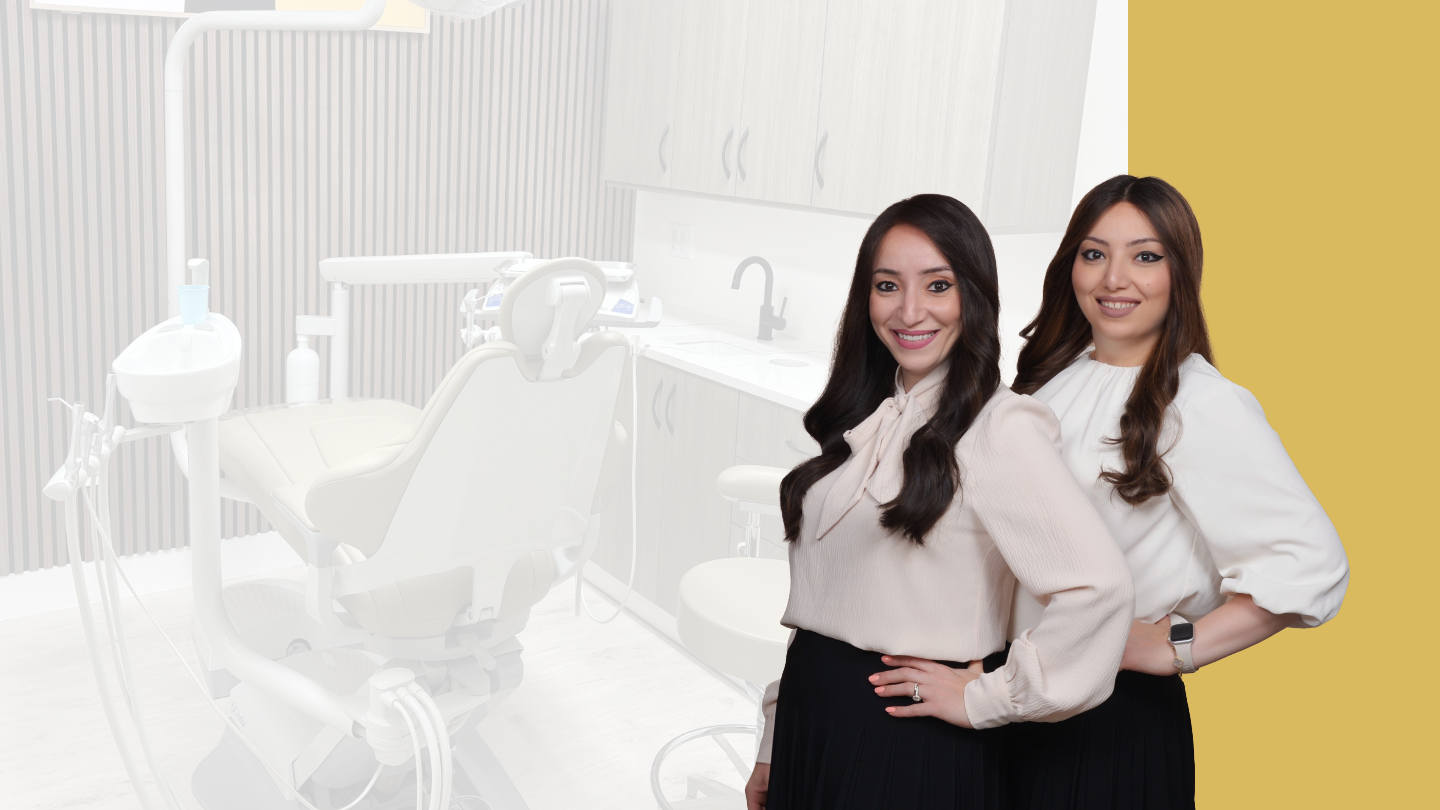
DNTL SPOT is owned and run by two sisters, Dr. Inessa Murdakhayeva and Dr. Regina Murdakhayeva. The dentist who diagnoses the cavity is the dentist who restores it.
Ready to book?
Pick a time online in under a minute, or call and speak to the front desk.
We are at 1455 Broadway in Hewlett. Patients come to us for tooth-colored fillings and sealants from Cedarhurst, Lawrence, Inwood, North Woodmere, Lynbrook, Far Rockaway, East Rockaway, Atlantic Beach, and Valley Stream.
Most fillings are a single short appointment, and the Sunday hours mean you do not have to take time off work for one. New to the practice? Our new patient resources page explains what to bring to a first visit.
Ready when you are
A small cavity is a short, inexpensive appointment. The same tooth left a year is usually neither. Check available times online or call the office.
1455 Broadway, Hewlett, NY 11557
(516) 226-9160
Monday & Wednesday 9:00 AM–5:00 PM · Sunday 9:00 AM–3:00 PM
Share a few details and we’ll show you our next available times.
Prefer to talk it through? Call us at (516) 226-9160