Elevate your smile. Enjoy an exclusive $150 off our professional teeth whitening.

Invisalign in the Five Towns

Straighten your teeth without metal braces — free consultation, $500 off, and whitening when you finish.

Invisalign straightens teeth with a series of clear, removable aligners instead of brackets and wires. At DNTL SPOT in Hewlett, NY, Dr. Inessa Murdakhayeva and Dr. Regina Murdakhayeva plan every case digitally, so you can see a simulation of your finished smile before you commit to anything.

Members save $500. Ask about our membership plan when you book, or call (516) 226-9160.

Check Time Slots

Invisalign consultation at DNTL SPOT in Hewlett, NY
Every Invisalign case at DNTL SPOT starts with a digital scan and a preview of the result.

Free Invisalign consult

A scan, a plan and a price before you commit to anything.

Written costs up front

An itemized estimate with your insurance applied, before treatment starts.

Seen by an owner-dentist

Dr. Inessa and Dr. Regina treat you themselves, start to finish.

How Invisalign works

Teeth move when steady, gentle pressure is applied over time. Braces do this with a wire threaded through brackets. Invisalign does it with a sequence of custom-made plastic trays, each shaped slightly differently from the last.

We take a digital scan of your teeth — no impression putty — and use it to plan the whole movement from where your teeth are now to where they should end up. That plan is turned into a series of aligners. You wear each set for about one to two weeks, then swap to the next. Each tray moves specific teeth a fraction of a millimeter, and the cumulative effect over months is what straightens the arch.

Most cases also use attachments: small tooth-colored bumps bonded to certain teeth that give the aligner something to grip so it can rotate or upright a tooth rather than just tip it. They come off at the end and they are much less visible than brackets.

The American Dental Association is clear that orthodontic treatment of any kind should be planned and supervised by a dentist or orthodontist who examines you in person. That is the central difference between Invisalign in a dental office and the mail-order aligner companies.

What Invisalign can and cannot fix

Invisalign handles the large majority of adult and teen cases we see. It works well for:

  • Crowding — teeth overlapping because there is not enough room in the arch.
  • Spacing and gaps, including a gap between the front teeth.
  • Mild to moderate overbite, underbite, and crossbite.
  • Relapse after braces — teeth that drifted because a retainer stopped being worn. These cases are often short and inexpensive.
  • Pre-restorative alignment — straightening teeth into better positions before veneers or crowns, so less tooth structure has to be removed.

It is less suitable, or needs to be combined with other treatment, when there is a severe skeletal discrepancy between the jaws, teeth that need to be moved a long distance vertically, or significant untreated gum disease. If a case is genuinely better served by braces or by an orthodontist, we will tell you that at the consultation rather than starting something that will not finish well.

Active decay and gum disease have to be treated first. Aligners hold plastic against the teeth for twenty-two hours a day, and moving teeth in an unhealthy mouth makes problems worse.

Wondering if you are a candidate?

The consultation is free. We scan your teeth and show you the plan before you decide anything.

Invisalign vs. braces

Both work. The right answer depends on the case and on what you can live with day to day.

Appearance. This is the reason most adults ask about Invisalign in the first place. The aligners are clear and, from conversational distance, most people will not notice them. Attachments are visible up close but far less so than metal brackets.

Removability. You take aligners out to eat, so nothing is off the menu and flossing stays normal. Braces mean avoiding hard and sticky foods for the whole treatment and threading floss around a wire.

Comfort. Aligners have no sharp edges, so there are no brackets cutting into your cheek and no emergency visits for a poking wire. There is still pressure and tenderness for a day or two with each new tray — that is the tooth movement, and it is normal.

Appointments. Invisalign check-ins are typically every six to ten weeks and are short. Braces need more frequent adjustments.

Discipline. This is the honest trade-off. Braces work whether you are motivated or not. Invisalign only works if the aligners are actually in your mouth twenty to twenty-two hours a day. If you know you will not manage that, braces may be the better choice, and we would rather say so up front.

Complexity. For severe bite problems, braces still have more control. Invisalign has closed much of that gap, but not all of it.

Your Invisalign treatment, step by step

1. Consultation and digital scan

We examine your teeth and gums, take X-rays and photographs, and scan your mouth digitally. The scan takes a few minutes and there is no impression tray involved. We also check for decay and gum health, because those have to be sound before aligners start.

2. Your treatment plan and preview

The scan is used to build a three-dimensional plan showing each stage of movement. You see the projected end result before you decide anything, along with the number of aligners, the expected duration, and the exact cost. This is the point to ask questions — about your midline, about a particular tooth, about how the bite will settle.

3. Fitting and attachments

When your aligners arrive we place the attachments, fit the first set, and check they seat fully. You get instructions, a case, and enough aligners to cover several weeks.

4. Wearing them

Twenty to twenty-two hours a day. Out for meals and for anything other than water. Change to the next set on the schedule we give you, usually every one to two weeks.

5. Check-ins

Every six to ten weeks we confirm the teeth are tracking to plan. If a tooth is lagging we adjust — sometimes with extra wear time on one tray, sometimes with a refinement scan later on.

6. Refinement and retainers

Most cases finish with a short refinement stage: a fresh scan and a small additional series to perfect the details. Then retainers, which matter more than people expect. Teeth drift for the rest of your life. A retainer is what keeps the result.

Comparing aligners with braces?

Bring your questions. We will show you both paths and what each one means for your case.

Invisalign cost, insurance, and the $500 member discount

Cost depends on how far the teeth have to move and how many aligners that takes. A short case correcting minor front-tooth crowding costs considerably less than a full-arch case running eighteen months. We give you the exact figure for your case in writing at the consultation, before you commit — not a range, and not a number that changes later.

Three things usually bring it down:

  • Orthodontic insurance benefits. Many dental plans include a separate lifetime orthodontic maximum that applies to adults as well as children. We are in network with fourteen PPOs — Aetna, AlwaysCare, Ameritas, Anthem, Cigna, Delta Dental, GEHA, Guardian, Humana, Lincoln Financial, MetLife, Principal, United Concordia, and United Healthcare — and we will check your orthodontic benefit before you decide. We do not participate in Medicaid or Medicare.
  • Our membership plan. Members get $500 off Invisalign, on top of preventive care being included. For a patient without insurance, the plan usually pays for itself on an Invisalign case alone. Details are on the membership plan page.
  • Monthly financing. Third-party financing spreads the cost over the treatment. See our financial information page for what we accept.

An HSA or FSA can also be used for orthodontic treatment, which is worth checking if you have one.


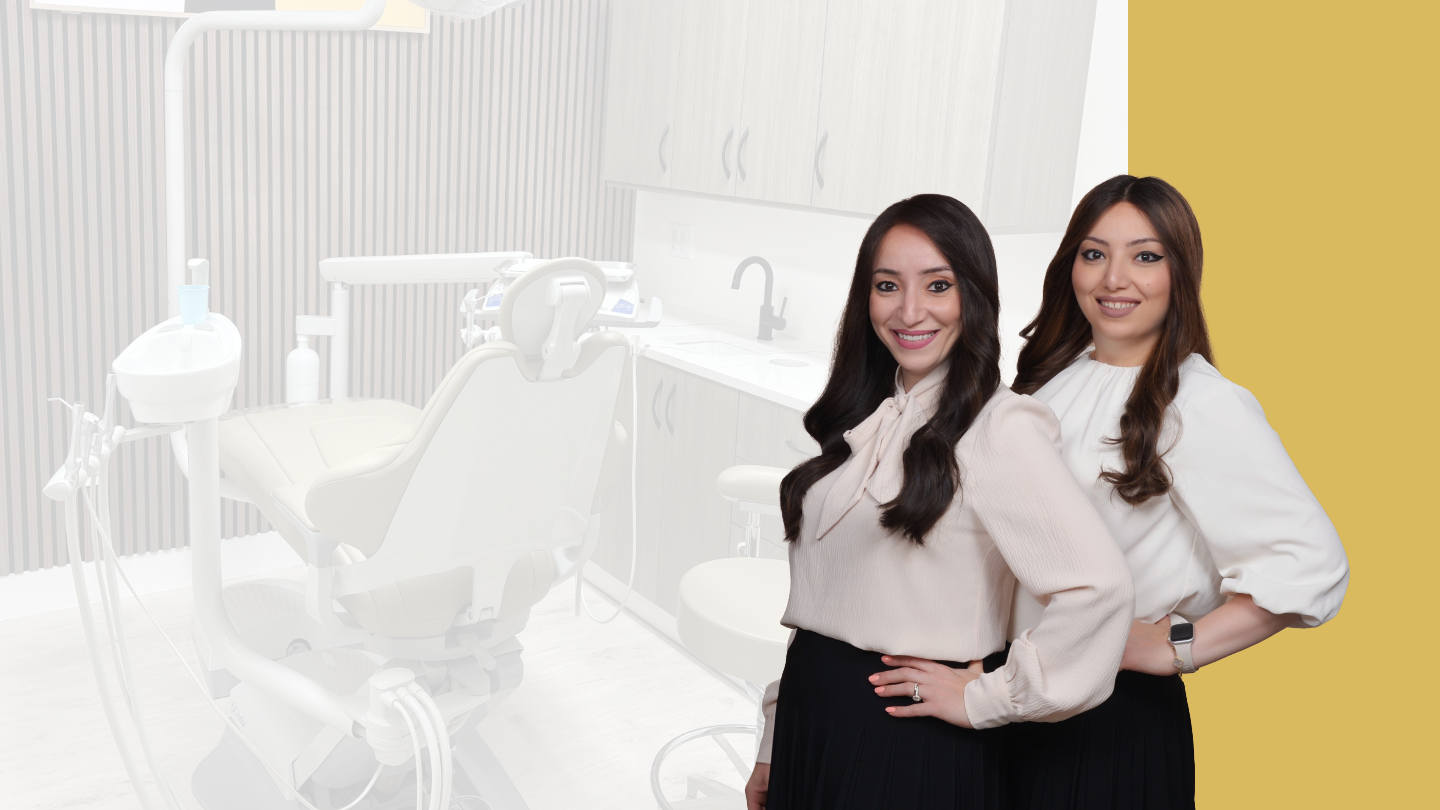
Dr. Inessa and Dr. Regina Murdakhayeva, Invisalign providers in Hewlett, NY
Dr. Inessa and Dr. Regina Murdakhayeva plan every Invisalign case themselves.

Living with aligners: the honest version

Nobody tells you these parts at the consultation, so here they are.

The first few days of each tray ache. Not badly, but the teeth feel tender and biting feels odd. Switching to a new set in the evening means you sleep through the worst of it.

You will talk slightly differently for about a week. A mild lisp is common at the start and almost always disappears as your tongue adapts. Reading out loud for a few minutes a day speeds it up.

Coffee is the main nuisance. Only water goes in with aligners in. Anything else either stains the plastic or sits against your teeth as sugar and acid with nowhere to go. Coffee and tea become sit-down events rather than all-morning ones.

You will brush more. Aligners go back in after eating, so teeth need cleaning first. Most patients keep a brush at work.

Attachments feel bigger than they look. Your lip catches on them for the first week, then you stop noticing.

Twenty-two hours is the real number. Patients who treat it as a guideline are the ones whose teeth stop tracking and whose treatment runs long. The people who finish on time are simply the ones who wore them.

Want the price in writing?

$500 off, insurance applied, and 0% financing for up to two years — all laid out before you start.

Invisalign for adults who had braces as a teenager

A large share of our Invisalign patients are adults in their thirties, forties, and fifties who wore braces once already. The teeth were straight at the end, the retainer got worn for a year or two, and then it sat in a drawer. Fifteen years later the lower front teeth have crowded again and the upper midline has shifted.

This is the single most satisfying category of case we treat, for a practical reason: the teeth have been in the right position before, so the bone and the roots already know the way back. Relapse cases are frequently short — often three to six months and a small number of aligners — and correspondingly less expensive than a case starting from scratch.

If that describes you, it is worth a consultation even if you assume the problem is too minor to bother with. Crowded lower incisors are hard to floss properly, and teeth that are hard to clean are the ones that develop decay between them and gum inflammation around them. Straightening them is a hygiene decision as much as a cosmetic one.

The other thing we will do differently this time is take retention seriously from the start, so you are not back in the same position in another fifteen years.

Why patients choose DNTL SPOT for Invisalign

DNTL SPOT is owned and run by two sisters — Dr. Inessa Murdakhayeva and Dr. Regina Murdakhayeva. The dentist who plans your case is the dentist who sees you at every check-in.

  • You see the plan before you pay. A digital preview of the finished result and a written, fixed price at the consultation.
  • Invisalign specifically. We use Invisalign rather than a cheaper in-house aligner system, because the planning software, the attachment design, and the predictability of the movements are better.
  • Honest candidacy assessment. If braces or an orthodontic referral would serve you better, we say so. A case that should not have been an aligner case is bad for you and bad for us.
  • Retainers taken seriously. We plan retention from the start, because an unretained result relapses and that is the most common way orthodontic treatment is wasted.
  • Convenient hours. Monday, Wednesday, and Sunday appointments, with free parking outside.

Ready to start straightening?

Pick a time online in under a minute, or call and speak to the front desk.

Serving Hewlett and the Five Towns

We are at 1455 Broadway in Hewlett, a short drive from Cedarhurst, Lawrence, Inwood, North Woodmere, Lynbrook, Far Rockaway, East Rockaway, Atlantic Beach, and Valley Stream. Patients come to us for Invisalign from across the Five Towns.

Sunday appointments make check-ins easy to fit around work and school, which matters over a treatment that runs several months. New to the practice? Our new patient resources page covers what to bring to a first visit.

Frequently asked questions

How long does Invisalign take?

Most cases run six to eighteen months. Minor front-tooth crowding or post-braces relapse can be as short as three to six months. We give you an expected number of aligners and a duration at the consultation.

Does Invisalign hurt?

There is pressure and tenderness for a day or two after each new tray, similar to the ache after a braces adjustment but milder. It fades as the teeth move. Over-the-counter pain relief is rarely needed beyond the first couple of changes.

Can people tell I am wearing them?

Usually not in conversation. Aligners are clear and thin. Attachments are visible if someone is looking closely at your teeth, but they are tooth-colored and far less obvious than brackets.

What happens if I lose an aligner?

Call us. Depending on where you are in the series we will usually have you go back to the previous tray or move forward to the next one while a replacement is ordered. Do not simply leave them out — teeth start drifting back within days.

Is Invisalign better than mail-order aligners?

It is a different thing. Mail-order systems have no in-person examination, no X-rays, no attachments, and no supervision, which limits what they can safely move and means undiagnosed decay or gum disease goes unaddressed. The ADA has publicly opposed direct-to-consumer orthodontics for those reasons.

Do you treat teenagers?

Yes. Invisalign has a teen-specific product with wear indicators and allowances for teeth that are still erupting. Suitability depends on the case and on whether the wear time is realistic for that particular teenager.

Will I need a retainer forever?

In some form, yes. Nightly at first, then less often long term. Teeth move throughout life, with or without orthodontic treatment. A retainer is the only thing that holds the result.

Can I whiten my teeth during treatment?

Usually it is better to wait until the aligners come off and the attachments are removed, so the whitening is even. We are happy to plan whitening for right after your last tray.

Do I need a referral to an orthodontist?

Not for most cases. General dentists provide Invisalign routinely. For complex skeletal problems we refer, and we will be straightforward with you about which category your case falls into.

What if my teeth stop tracking?

It happens, usually from wear time or a tooth that needs more grip. We catch it at check-ins and correct it with a refinement scan and an additional series, which is planned into most cases anyway.

Can I get Invisalign if I have crowns or implants?

Often yes. Crowns can usually be moved, though attachments bond less reliably to porcelain. Implants do not move at all, so they become fixed anchor points and the plan is built around them.

How often will I need to come in?

Typically every six to ten weeks, and the appointments are short. We will also give you several sets of aligners at a time so you are not tied to the office between visits, which helps if you travel.

Can I play sports or a wind instrument?

Sports, yes — though for contact sports we will discuss a mouthguard and when to wear aligners around it. Wind and brass players usually adapt within a week or two, and many find aligners easier than braces because the surface is smooth.

What if I need a filling during treatment?

Routine work can usually be done mid-treatment, and small fillings rarely affect how an aligner fits. Anything that changes the shape of a tooth significantly may need a refinement scan afterwards, which we plan for.

Ready when you are

Book your Invisalign consultation

The consultation is where you find out whether Invisalign suits your case, what it will cost, and how long it will take — with a preview of the result before you decide. Check available times online or call the office.

Visit us

1455 Broadway, Hewlett, NY 11557

Call

(516) 226-9160

Office hours

Monday & Wednesday 9:00 AM–5:00 PM · Sunday 9:00 AM–3:00 PM