
Full, partial and implant-retained options — fitted and adjusted until they actually feel right.
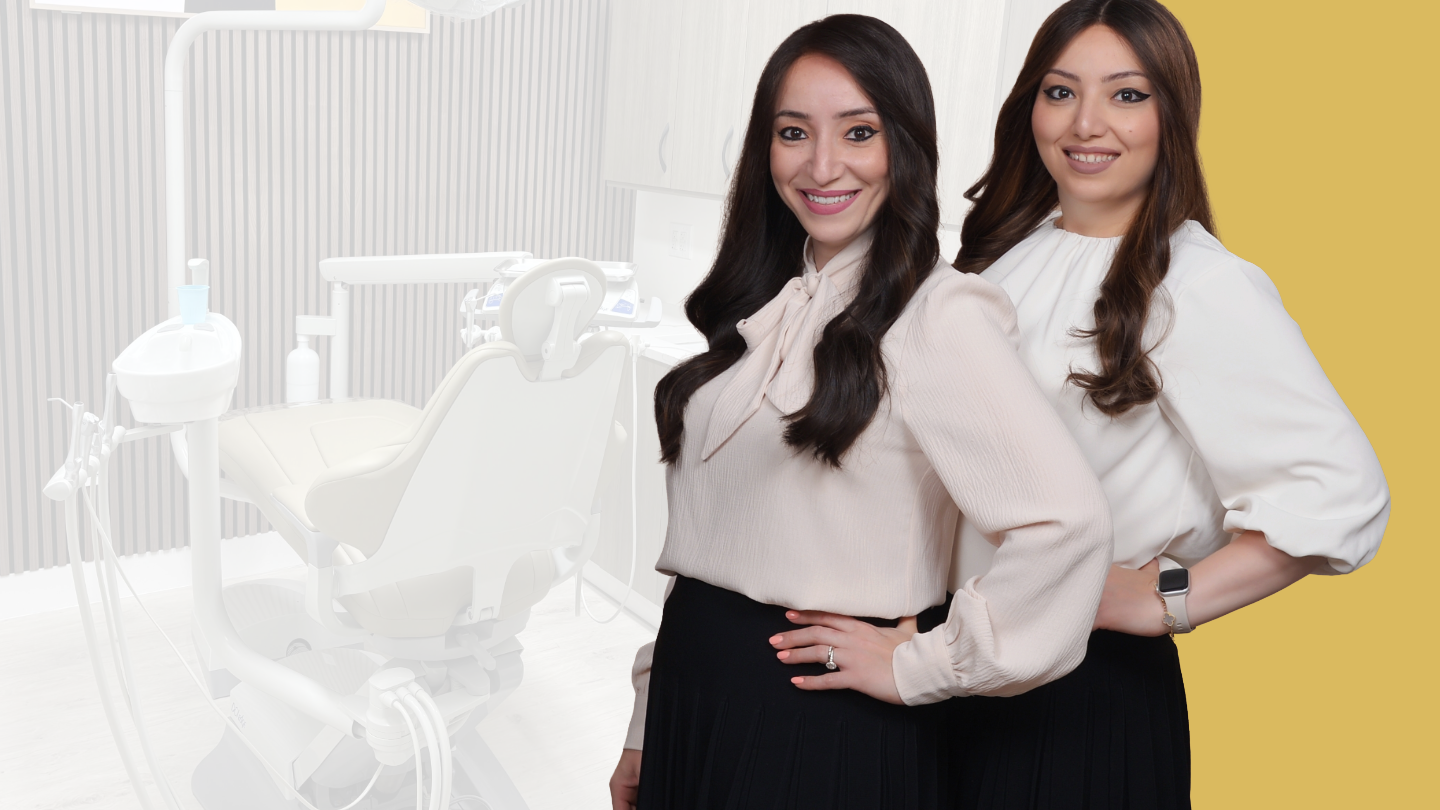
Modern dentures are a long way from the ones people picture. At DNTL SPOT in Hewlett, NY, Dr. Inessa Murdakhayeva and Dr. Regina Murdakhayeva fit full and partial dentures, and where a lower denture will not stay put, implant-retained options that clip into place and do not move.
Struggling with a denture that slips? Bring it in. Sometimes the answer is a reline rather than a replacement. Call (516) 226-9160.
On this page
Missing only one or a few teeth? Compare partial dentures with bridges and implants in our guide to missing tooth solutions in Hewlett.
We keep adjusting after delivery until you can eat and speak comfortably.
An itemized estimate with your insurance applied, before treatment starts.
Dr. Inessa and Dr. Regina treat you themselves, start to finish.
There are three broad categories, and the right one depends on how many teeth are missing and what is left to work with.
The American Dental Association covers the same categories if you want a second source while you are deciding.
If there is one thing on this page worth knowing, it is this. A lower plate that will not stay down is not a problem you have to accept, and it is not a sign you have failed to adapt. The lower jaw simply does not offer enough surface for suction.
Two to four implants placed in the lower jaw give the denture something to clip onto. It comes out for cleaning as usual, but while it is in, it does not lift, rock, or slide when you eat. Patients who move to implant retention describe it as the difference between coping and forgetting about it.
As with all implant work at our practice, the surgical placement is done by an oral surgeon we refer to and coordinate with, and we plan and fit the prosthesis that goes on top. Adhesive, by comparison, is a workaround: it helps a well-fitting plate and does nothing for a badly fitting one.
Removable prosthetics are the least invasive and least expensive way to replace missing teeth, and for some situations they remain the right answer — a full arch on a limited budget, or a patient whose health makes surgery unwise.
What you should know going in is that they rest on the gums rather than in the bone, so the bone underneath continues to resorb. That is why a plate that fitted beautifully three years ago works loose: it has not changed shape, the jaw has. Implants interrupt that process because they load the bone the way a root does.
A fixed bridge sits between the two, for smaller gaps with healthy teeth either side. We price the realistic options side by side and let you decide with the numbers in front of you rather than steering you toward the most expensive one.
Not sure which type suits you?
Full, partial or implant-retained — we will walk you through what fits your mouth and your budget.
Understanding this makes everything else on this page make sense. A natural root does two jobs: it holds the tooth, and every time you chew it transmits force into the surrounding bone. Bone is living tissue that maintains itself in response to load, so when the root goes, the stimulus goes with it and the ridge begins to shrink.
The loss is fastest in the first year after extraction and continues slowly for the rest of your life. In the lower jaw it is particularly consequential, because the ridge that has to hold an appliance steady gets progressively flatter and narrower. This is the reason a set that fitted well in year one works loose by year three, and it is why the answer is often a reline rather than blaming the fit.
Over many years, significant ridge resorption also changes facial shape: the lower face shortens, the chin rotates forward, and lines around the mouth deepen. Well-made replacement teeth restore much of that support, which is why people often look better with them than they did in the period of struggling with failing teeth beforehand.
Implants are the only option that interrupts the process, because a fixture in the bone loads it the way a root did. That is not an argument that everyone should have implants — it is context for why we raise them, and why we suggest at least two in the lower jaw when the budget can stretch to it.
We examine what remains, take X-rays, and check the health of the gums and the shape of the ridge. If teeth need removing first, we plan that and decide whether an immediate set makes sense.
We record the shape of the ridge and how your jaws meet. This is the stage that decides whether the finished plates fit, so it is not rushed.
A wax version with the teeth set in it comes back from the laboratory. You see the shape, the shade, and the position of the front teeth, and you speak and smile with it in. Changes are easy at this stage and difficult afterwards, so this is the appointment to be fussy at.
The finished set is fitted and adjusted. We show you how to insert and remove them and what the first two weeks feels like.
Almost every new set needs one or two small adjustments as sore spots appear. This is normal and expected, and those appointments are part of the treatment rather than an extra.
Allow around four to six weeks from start to fitting.
Worried about how they will feel?
We adjust after delivery as many times as it takes. That is part of the treatment, not an extra.
The honest version, because nobody enjoys surprises here.
The first two weeks are the hardest. A new plate feels bulky and your tongue will keep finding it. That fades.
Speech takes a week or two. Certain sounds go odd at first. Reading aloud for ten minutes a day genuinely speeds this up.
Eat soft foods in small pieces at first, chewing on both sides at once to keep the denture stable. Build back up to harder foods over a few weeks.
Sore spots are expected. Do not suffer through them and do not adjust it yourself — come in and we will relieve the exact spot in a few minutes.
Increased saliva in the first days is normal and settles.
Patients who do best are the ones who come to the review appointments rather than persevering quietly with something that hurts.
This part is more personal than clinical, and it is where the try-in appointment earns its place.
Shade. Very white teeth on an adult face read as artificial. We usually recommend something close to the natural shade you had, or a step lighter. If you have remaining natural teeth, we match to those.
Shape and size. Squarer teeth read as more masculine, softer rounded corners as more feminine, but the stronger rule is proportion to your face. If you have an old photograph from before the teeth were lost, bring it — it is genuinely the most useful thing a patient can bring to this appointment.
Character. Perfectly uniform teeth look manufactured. A slight rotation, a small overlap, or a little irregularity at the edges reads as real. We can build that in if you want it.
Lip support. How far forward the front teeth sit determines how your upper lip drapes. Too far back and the lip looks sunken; too far forward and the smile looks pushed out. We test this with you speaking and smiling, not just sitting still.
Take your time here and bring someone whose opinion you trust. Changes are simple in wax and expensive in acrylic.
Cost varies with the type. A partial denture costs less than a full set; a premium full denture with better teeth and a more refined fit costs more than a basic one; implant-retained dentures carry the cost of the implants on top of the denture itself.
Most dental plans cover dentures as a major prosthodontic service, commonly around half once the deductible is met and subject to your annual maximum. Many also apply a replacement limitation — typically one set every five years — which matters if you already have a denture. We are in network with fourteen PPOs — Aetna, AlwaysCare, Ameritas, Anthem, Cigna, Delta Dental, GEHA, Guardian, Humana, Lincoln Financial, MetLife, Principal, United Concordia, and United Healthcare — and we submit a pre-treatment estimate so the coverage figure comes from your insurer in writing. We do not participate in Medicaid or Medicare.
You get an itemized written plan before treatment starts, including the cost of any extractions and of the relines you can expect in the first year. Financing options are on our financial information page, and our membership plan discounts treatment for uninsured patients.


Want the price in writing?
An itemized estimate with your insurance applied, plus 0% financing for up to two years.
A denture that has become loose usually does not need replacing. A reline adds material to the fitting surface so it matches the changed shape of your ridge, and it is far cheaper than a new set. Most dentures need relining every couple of years.
If a denture cracks or a tooth comes off it, bring it in rather than gluing it. Superglue is not safe in the mouth, it makes a proper repair far harder, and it often ruins a denture that could otherwise have been fixed the same week.
A full replacement is generally needed every five to ten years, as the acrylic wears, the teeth flatten, and the ridge changes beyond what a reline can compensate for. Worn denture teeth also reduce chewing efficiency gradually enough that people do not notice until the new set goes in.
Ready to get started?
Pick a time online in under a minute, or call and speak to the front desk.
DNTL SPOT is owned and run by two sisters, Dr. Inessa Murdakhayeva and Dr. Regina Murdakhayeva. The same dentist takes your impressions, runs the try-in, and does the adjustments afterwards.
We are at 1455 Broadway in Hewlett. Patients come to us for dentures and denture repairs from Cedarhurst, Lawrence, Inwood, North Woodmere, Lynbrook, Far Rockaway, East Rockaway, Atlantic Beach, and Valley Stream.
Denture treatment involves several short appointments, so the Sunday hours help. If you are new to the practice, our new patient resources page explains what to bring.
Ready when you are
Whether you are replacing teeth for the first time or fighting with a denture that no longer fits, the consultation will tell you what your realistic options cost and how long each takes. Check available times online or call the office.
1455 Broadway, Hewlett, NY 11557
(516) 226-9160
Monday & Wednesday 9:00 AM–5:00 PM · Sunday 9:00 AM–3:00 PM
Share a few details and we’ll show you our next available times.
Prefer to talk it through? Call us at (516) 226-9160