Elevate your smile. Enjoy an exclusive $150 off our professional teeth whitening.

Dental Implants in Hewlett, NY

Replace a missing tooth with something that looks and works like your own — planned and restored in Hewlett.

Dental implants replace missing teeth from the root up, and they are the closest thing modern dentistry has to giving you the tooth back. At DNTL SPOT in Hewlett, NY, we handle the restorative half of implant treatment — the planning, the abutment, and the crown that you actually see and chew with — and we work with a trusted oral surgeon for the surgical placement.

Missing a tooth, or wearing a denture you dislike? Book a consultation and we will tell you honestly whether dental implants are the right answer for your case. Call (516) 226-9160.

Check Time Slots

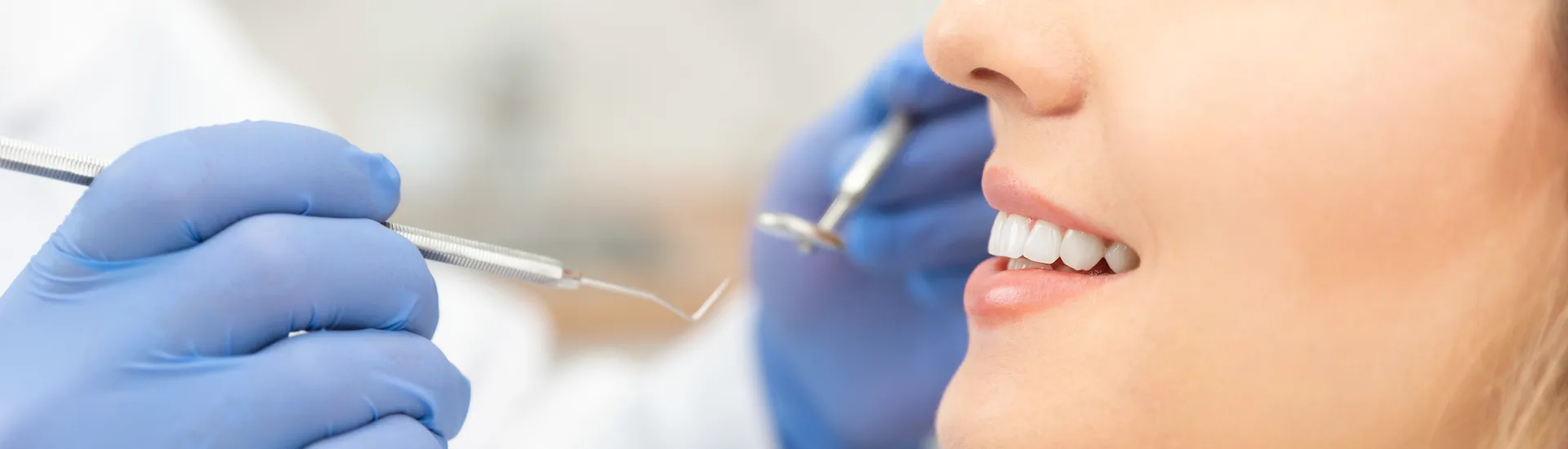
Dental implants consultation at DNTL SPOT in Hewlett, NY
Planning dental implants starts with imaging and an honest conversation about alternatives.

One team, start to finish

We plan your implant, coordinate the placement, and restore the tooth ourselves.

Written costs up front

An itemized estimate with your insurance applied, before treatment starts.

Seen by an owner-dentist

Dr. Inessa and Dr. Regina treat you themselves, start to finish.

What dental implants actually are

People use “implant” loosely to mean the whole replacement tooth. In practice, dental implants have three separate parts, and knowing which is which makes every conversation about cost and timing clearer.

  • The fixture. A titanium or zirconia post placed into the jawbone, taking the place of the natural root. Over several months the bone grows onto its surface and locks it in place, a process called osseointegration.
  • The abutment. A connector that screws into the fixture and sits just above the gum line.
  • The crown. The visible, functional tooth, made to match the shade and shape of the teeth beside it.

That anchorage in bone is why dental implants behave differently from bridges and dentures. Nothing rests on the gums, nothing clips onto neighboring teeth, and the bone around the site keeps being loaded every time you chew, which slows the bone loss that follows tooth loss. The American Dental Association has a good plain-English overview if you want a second source.

How we handle implant treatment — and why we say so upfront

We want to be straightforward about this, because a lot of practices are not. DNTL SPOT does implant restorations. We plan the case, take the records, design and fit the abutment and crown, and look after the implant for as long as you are our patient. We do not perform the surgical placement in this office — that is done by an oral surgeon we refer to and coordinate with.

There is a reason we prefer this arrangement. Surgical placement is a specialist skill, and position is everything: an implant placed a few degrees off angle creates a crown that is hard to clean, hard to make look right, and more likely to fail years later. Working with a surgeon who does this every day produces better outcomes than a general dentist doing it occasionally. The ADA has itself commented publicly on the importance of appropriate standards in implant dentistry.

What this means for you in practice:

  • One practice — ours — owns the plan from start to finish, so you are not left coordinating between two offices.
  • We design the final crown before surgery, so the surgeon knows exactly where the fixture needs to sit.
  • Your follow-up care, cleanings, and any future adjustments happen here, with the dentists who know the case.
  • If dental implants turn out not to be right for you, we will say so before you have spent anything on surgery.

Missing a tooth and unsure what to do?

Bring the question to us. We will tell you honestly whether an implant is the right answer for your case.

Who dental implants suit

Dental implants are a good answer for a single missing tooth, several missing teeth, or a full arch that is currently held by a denture. They are particularly worth considering when:

  • The teeth on either side of the gap are healthy, and you would rather not cut them down to carry a bridge.
  • A lower denture moves when you eat or talk. An implant-retained overdenture solves this more reliably than any adhesive.
  • A back tooth has been lost and the bite is starting to collapse into the space.
  • A tooth is failing and cannot be saved by a root canal, so replacement is being planned in advance.

They are not right for everyone. Uncontrolled diabetes, active gum disease, heavy smoking, some medications affecting bone metabolism, and insufficient bone volume all affect whether an implant will integrate and last. Growth also matters: dental implants are not placed in patients whose jaws are still developing. Some of these are absolute barriers, most are things to address first — gum disease treated, smoking reduced, a bone graft placed to rebuild the site.

The consultation exists to sort this out. We take imaging, assess bone and gum health, and either plan the case or tell you what has to change before dental implants become sensible.

Dental implants vs. bridges vs. dentures

Dental implants are not automatically the right answer, and it is worth understanding what you are choosing between.

A fixed bridge is faster and usually cheaper up front. It is cemented to the teeth on either side of the gap, which means those teeth are reduced to stumps to carry it — a permanent change to two healthy teeth. Bridges also do nothing to preserve bone under the gap, and they typically need replacing after ten to fifteen years.

A removable partial or full denture is the least expensive and least invasive option. It is also the one patients are least satisfied with: it moves, it covers the palate, chewing efficiency drops sharply, and the bone underneath continues to shrink, which is why dentures need relining and eventually stop fitting.

Dental implants cost more at the outset and take longer. In exchange, adjacent teeth are untouched, bone is preserved, chewing force is close to natural, and the result is routinely reported to last decades. For a single missing tooth with healthy neighbors, an implant is usually the better value over any horizon longer than about a decade.

Doing nothing is also a decision, and it is rarely a neutral one. The opposing tooth over-erupts into the space, the neighbors tip in, cleaning becomes harder, and the site loses bone width — which can make implants harder or impossible later without grafting.

For a plain-language comparison of every option, read our guide to missing tooth solutions in Hewlett.

Weighing an implant against a bridge?

We will lay out both options, what each costs, and how long each one tends to last.

The process, step by step

1. Consultation and imaging

We examine the site, take X-rays and where needed a 3D scan, and assess bone volume and gum health. We talk through implants, bridges, and dentures honestly, with costs for each.

2. Planning

We design the final tooth first and work backwards to where the fixture must sit. That plan goes to the surgeon, so the surgical position is driven by the restoration rather than the other way around.

3. Extraction or grafting, if needed

If the failing tooth is still present it is removed, often with a graft placed at the same time to preserve the socket. Grafting adds healing time but frequently makes the difference between a good result and a compromised one.

4. Placement

The surgeon places the fixture under local anesthetic, usually in about an hour for a single site. Most patients describe it as less eventful than an extraction. A temporary tooth can often be provided so you are not left with a visible gap.

5. Healing

Three to six months, depending on the site and whether grafting was done, while the bone integrates with the fixture. You carry on normally during this period.

6. Abutment and crown

Back with us. We take a digital scan, fit the abutment, and place the final crown — shade-matched to your own teeth and adjusted until the bite feels right. This is typically two short visits.

7. Maintenance

Regular check-ups and hygiene visits, exactly as with natural teeth. We monitor the gum and bone levels around the implant at each recall.

Dental implants: cost and insurance in Hewlett

Because dental implants have three components and often involve more than one provider, the total varies more than most treatments. What drives it: whether an extraction is needed, whether the site needs grafting or a sinus lift, how many teeth are being replaced, and the material chosen for the crown.

We give you a written treatment plan at the consultation that separates the surgical fee from the restorative fee, so you can see the whole number before anything starts. No stage begins without you knowing what it costs.

On insurance: coverage for dental implants has improved considerably but remains inconsistent. Many plans cover part of the crown, fewer cover the fixture, and annual maximums are often reached partway through. We are in network with fourteen PPOs — Aetna, AlwaysCare, Ameritas, Anthem, Cigna, Delta Dental, GEHA, Guardian, Humana, Lincoln Financial, MetLife, Principal, United Concordia, and United Healthcare — and we submit a pre-treatment estimate to your insurer so the answer comes from them in writing rather than from us guessing. We do not participate in Medicaid or Medicare.

Where treatment spans two calendar years, staging it can let you use two annual maximums. Third-party financing and HSA or FSA funds are both options; see our financial information page, and our membership plan if you are uninsured.


Dr. Inessa and Dr. Regina Murdakhayeva, dental implants restorative dentists in Hewlett, NY
Dr. Inessa and Dr. Regina Murdakhayeva plan and restore every implant case themselves.

Want the full cost before you commit?

An itemized estimate with your insurance applied, plus 0% financing for up to two years.

Caring for dental implants

An implant crown cannot decay, which leads some people to assume it needs less attention. The opposite is closer to the truth. The gum and bone around dental implants can become inflamed and infected — peri-implantitis — and unlike a natural tooth there is no periodontal ligament to slow that process down. Bone loss around an implant can progress quietly and is difficult to reverse.

What protects it:

  • Brushing twice daily, angling the brush at the gum margin around the crown.
  • Cleaning between the teeth every day — floss, interdental brushes, or a water flosser. This matters more around an implant than almost anywhere else in the mouth.
  • Regular hygiene visits. Dental implants are cleaned with specific instruments to avoid scratching the surface, which is part of why professional maintenance matters.
  • A nightguard if you grind. Bruxism is one of the more common causes of late implant and crown failure, and a guard is inexpensive insurance.
  • Not smoking. Smoking is the single largest modifiable risk factor for implant failure.

Tell us promptly if the gum around an implant bleeds, feels sore, or if the crown ever feels loose. Caught early, these are usually straightforward to address.

Why patients choose DNTL SPOT

DNTL SPOT is owned and run by two sisters — Dr. Inessa Murdakhayeva and Dr. Regina Murdakhayeva. The dentist who plans your case is the dentist who restores it and sees you at every recall afterwards.

  • We tell you what we do and do not do. Restoration here, placement with a specialist. You know who is doing what before you agree to anything.
  • Restoration-driven planning. The crown is designed first, so the fixture goes where the tooth needs to be.
  • Alternatives presented fairly. If a bridge or a denture genuinely serves you better, we will say so, including when it is the cheaper option.
  • Written costs, separated by stage. Surgical and restorative fees itemized before you start.
  • Long-term care in one place. Your implant is monitored at every check-up by the people who restored it.

Ready to replace that tooth?

Pick a time online in under a minute, or call and speak to the front desk.

Serving Hewlett and the Five Towns

We are at 1455 Broadway in Hewlett, with free parking outside. Patients come to us for dental implants from Cedarhurst, Lawrence, Inwood, North Woodmere, Lynbrook, Far Rockaway, East Rockaway, Atlantic Beach, and Valley Stream.

Because implant treatment runs over several months, convenient appointments matter. Monday, Wednesday, and Sunday hours make it easier to fit visits around work. If you are new to the practice, our new patient resources page explains what to bring to a first visit.

Frequently asked questions

How long do dental implants last?

Long-term studies commonly report fixture survival above ninety percent at ten years, and many last far longer. The crown on top is the part more likely to need replacing eventually, much like any other crown. Outcomes depend heavily on cleaning, smoking, and grinding.

Does getting an implant hurt?

The placement itself is done under local anesthetic and most patients report it as less uncomfortable than they expected — often easier than the extraction that preceded it. Soreness for a few days afterwards is normal and usually managed with over-the-counter pain relief.

How long does the whole process take?

Typically four to nine months from placement to final crown, most of which is healing time you spend going about your life. Cases needing extraction and grafting first sit at the longer end.

Will I be without a tooth while it heals?

Usually not, if the gap is visible. A temporary crown, a small removable appliance, or a bonded temporary can cover the site during healing. We plan this before surgery, not after.

What is a bone graft and will I need one?

A graft rebuilds bone where it has been lost, giving the fixture enough volume to sit in. Whether you need one depends on how long the tooth has been missing and why it was lost. Imaging at the consultation answers this.

Can I replace all my teeth with dental implants?

Yes. Full-arch options range from an implant-retained overdenture that clips onto two to four fixtures, to a fixed full-arch bridge on four to six. These are planned case by case, and we will be frank about which is realistic for your bone and your budget.

Do dental implants ever fail?

Occasionally. Early failure means the fixture did not integrate with the bone, and the site is usually allowed to heal and retreated. Late failure is most often peri-implantitis driven by plaque, smoking, or an untreated grinding habit.

Can I get an implant the same day as my extraction?

Sometimes — immediate placement is possible when there is no active infection and enough bone. It is a surgical judgement, made on the imaging and at the time of extraction.

Will an implant look like my other teeth?

That is the point of restoration-driven planning. We match shade, shape, and translucency to the adjacent teeth. Front teeth are the hardest cases because the gum contour has to look natural too, which is exactly why the fixture position has to be right.

Do you place the implant here, or somewhere else?

Placement is done by the oral surgeon we work with. Everything else — planning, abutment, crown, and ongoing care — happens here at our Hewlett office.

Is an implant better than a root canal?

Not if the tooth can be saved. Keeping your own tooth is almost always the better outcome. Dental implants are for teeth that are already gone or genuinely beyond saving.

What is recovery like in the first week?

Expect some swelling and tenderness for two to three days, peaking around day two, and mild bruising in some cases. Most people take a day off and are back to normal activity after that. You will be given specific instructions: soft foods on that side, no vigorous rinsing for the first day, no smoking, and a prescribed rinse to keep the site clean. Call if swelling is increasing after day three rather than settling.

Are zirconia implants an option instead of titanium?

They exist and are sometimes chosen by patients who prefer a metal-free restoration or who have a documented titanium sensitivity, which is rare. Titanium has the longer track record and more published data behind it, so it remains the default. If this matters to you, raise it at the consultation and we will discuss it with the surgeon as part of the plan.

Ready when you are

Book your implant consultation

Bring your questions. You will leave the consultation knowing whether dental implants suit your case, what the alternatives would cost, how long it would take, and who does which part. Check available times online or call the office.

Visit us

1455 Broadway, Hewlett, NY 11557

Call

(516) 226-9160

Office hours

Monday & Wednesday 9:00 AM–5:00 PM · Sunday 9:00 AM–3:00 PM