

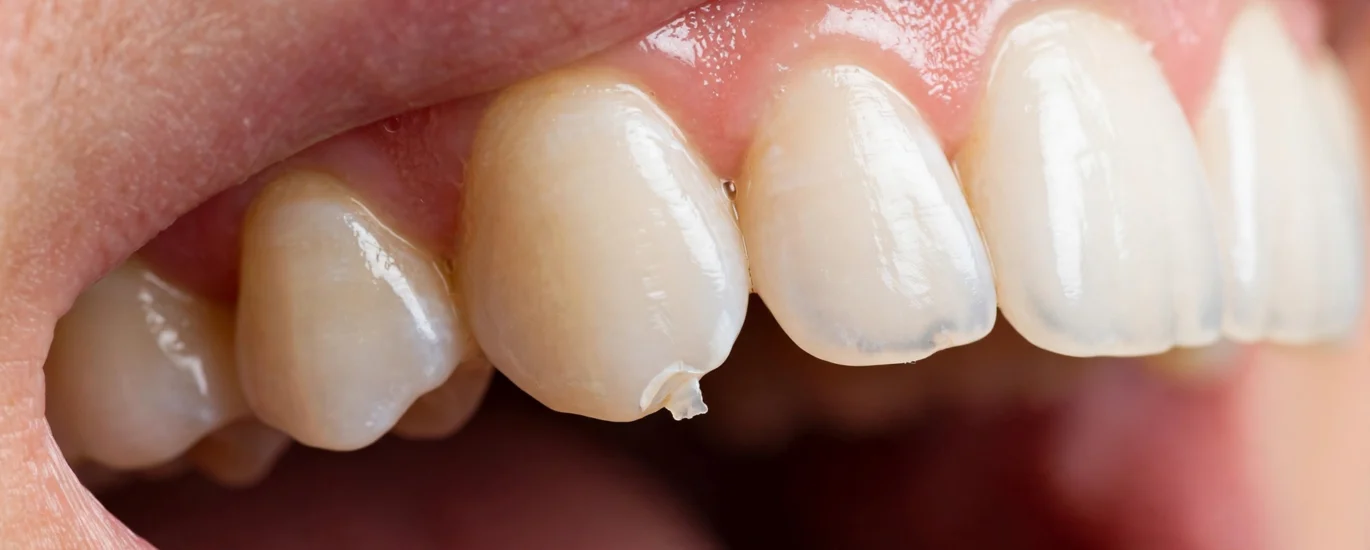
A chipped tooth can happen in a split second – a fall, a sports hit, biting into something harder than you expected. Most of the time it is more frightening than it is serious, but what you do in the first hour matters. This guide walks you through six calm steps to take before your dental visit, what to avoid, and how to tell when a chip is a real dental emergency.
First: Don’t Panic – Assess the Damage
Before you do anything else, take a breath and look. A chipped tooth can range from a tiny corner knocked off the enamel to a break deep enough to expose the nerve. Check in the mirror: is it just a rough edge, or can you see a large crack or a missing piece? Are you bleeding? Does the tooth hurt when air touches it, or only when you bite?
You do not need a perfect diagnosis – that is what the dentist is for. But knowing roughly what happened helps you describe it on the phone. Most chips are fixable, and modern dentistry has options for nearly every situation, from a simple smoothing to a full restoration.
6 Calm Steps to Take Before Your Visit
1. Rinse Your Mouth Gently With Warm Water
Rinse with warm water to clear away any debris and reduce the risk of infection around the exposed area. Keep it gentle – vigorous swishing can irritate a fresh chip. This simple step keeps the area clean until your dentist takes over.
2. Save the Fragment
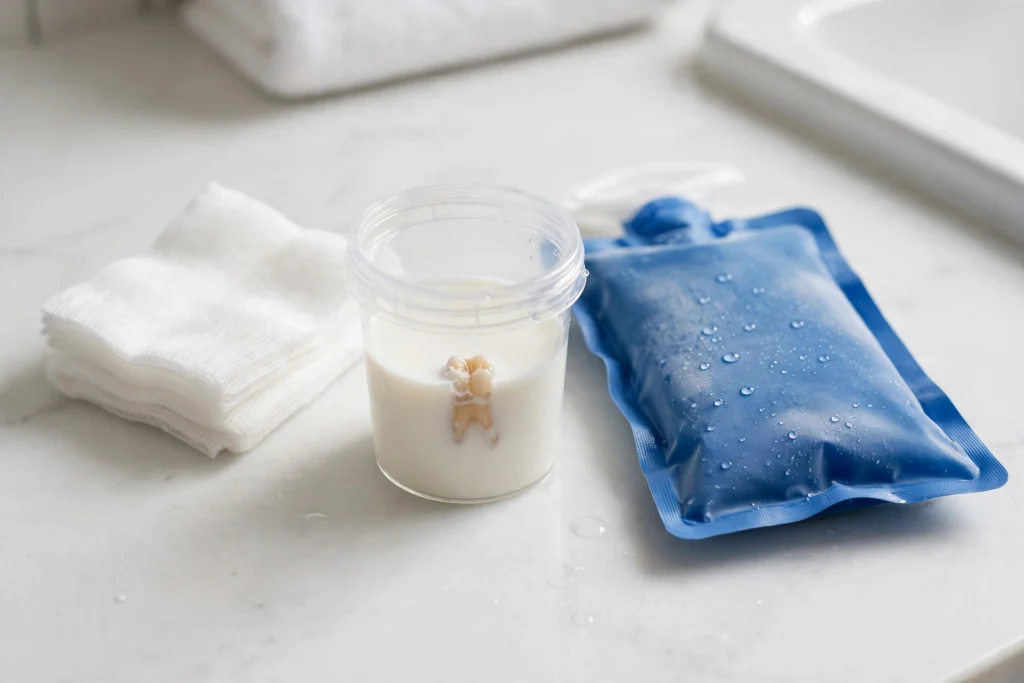
If you can find the broken piece of tooth, save it. Place the fragment in a small container of milk or saliva and bring it to your visit. Your dentist may be able to rebond the original piece, which is often the most natural-looking repair.
3. Stop Any Bleeding
If the chip damaged your gum or lip, press a piece of clean gauze against the spot until the bleeding stops. If bleeding does not ease within about 15 minutes, or the injury looks deep, that is a sign to seek urgent care rather than waiting.
4. Use a Cold Compress for Swelling
A cold compress or a bag of ice wrapped in a cloth, held to the outside of your cheek for 10-15 minutes at a time, helps limit swelling and dulls pain. Do not place ice directly on skin, and take short breaks between applications.
5. Protect the Tooth From Further Damage
A chipped tooth is weaker than it was. Avoid chewing on that side of your mouth, skip hard and crunchy foods, and keep very hot or cold drinks away from it – a chip can make a tooth painfully sensitive to temperature. If the edge feels sharp against your tongue or cheek, cover it temporarily with dental wax or a piece of sugar-free gum until you can be seen.
6. Call Your Dentist Promptly
A chipped tooth should be seen by a dentist as soon as possible – ideally the same day or the next day. Even a painless chip leaves the inner layers of the tooth exposed, and bacteria can reach the vulnerable area quickly. DNTL SPOT keeps emergency slots open for situations like this. If you are unsure whether your chip qualifies, our emergency dental care team can talk you through it by phone.
What NOT to Do With a Chipped Tooth
The internet is full of home fixes, but with a chipped tooth the wrong move can turn a simple repair into a root canal. Do not try to glue the fragment back yourself, do not file the rough edge with a nail file, and do not chew on the broken tooth to test whether it still works. Over-the-counter pain relievers can ease discomfort, but leave the actual repair to the dentist.
When a Chip Becomes a Dental Emergency
Not every chip needs a midnight phone call, but some do. Treat it as urgent and call right away if:
- The tooth is knocked loose, displaced, or completely out of its socket
- There is severe, throbbing pain that does not ease
- Bleeding will not stop after 15 minutes of steady pressure
- You see a large crack running down the tooth, or the break exposes the soft inner tissue
- There is swelling in the face or jaw, or you develop a fever
A knocked-out permanent tooth is the most time-sensitive: get to a dentist within the hour for the best chance of saving it. The American Dental Association’s dental emergency guide covers what to do for each type of injury.
How Your Dentist Fixes a Chipped Tooth
The repair depends on how much tooth was lost. For a small chip, your dentist can often just smooth and polish the rough edge in a single short visit. For moderate chips, a tooth-colored filling restores the shape in one appointment. Larger breaks may need a veneer or a full crown – a crown wraps the whole tooth and protects it from further cracking, which is why crowns are the standard repair for significant breaks.
Your dentist will take an x-ray first to make sure the damage is limited to what you can see. Treatment for a chip is usually straightforward and far more comfortable than most patients expect.
Chipped Tooth in Children
Children chip teeth more often than adults – playground falls, sports, and roughhousing are the usual suspects. The same six steps apply, with two additions: a baby tooth chip still deserves a dental look, because it can affect the adult tooth developing underneath, and a knocked-out baby tooth should not be pushed back in. When in doubt, call – pediatric chips are seen quickly.
The Bottom Line
A chipped tooth is almost always fixable, and fast, calm first aid makes the dentist’s job easier and the outcome better. Save the fragment, rinse gently, protect the tooth, and call promptly. If it just happened, call DNTL SPOT at (516) 226-9160 – we will get you seen.
(516) 226-9160 – Mon & Wed 9 AM-5 PM, Sun 9 AM-3 PM