
When a tooth is too damaged for a filling but doesn’t need to come out, dental crowns are often the answer. A crown is a custom-made cap that covers the whole visible part of the tooth, restoring its shape, strength, and appearance. If your dentist has mentioned one, this guide explains the types of dental crowns, what they’re made of, and when they’re really needed – so you can walk into your appointment knowing what to ask.
What Is a Dental Crown?
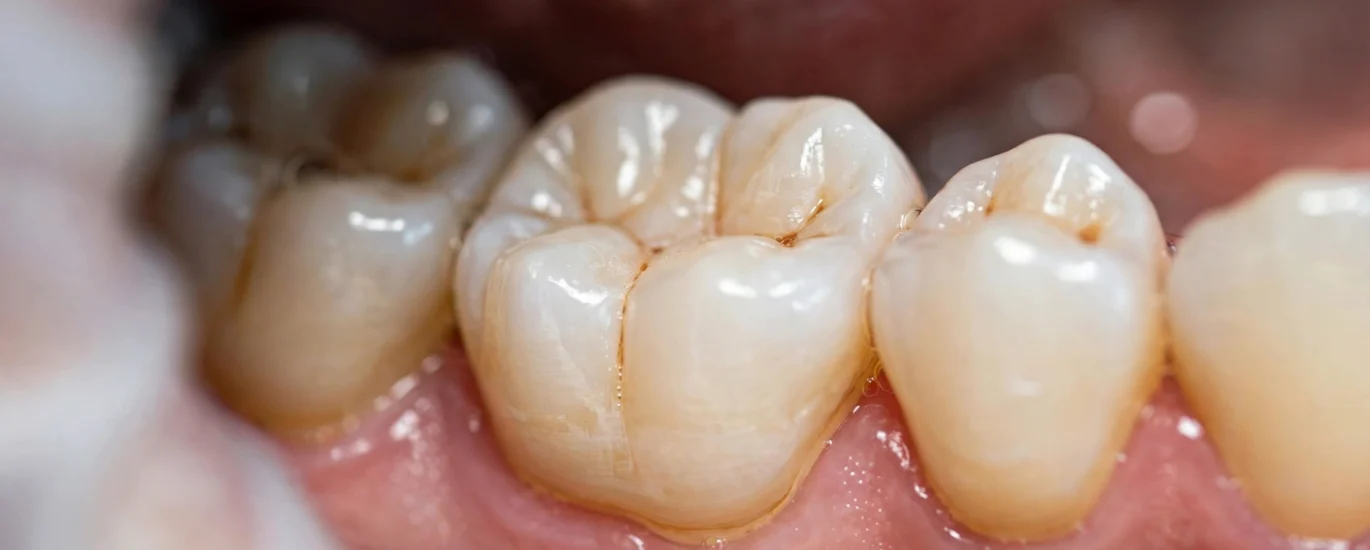
A dental crown works like a protective helmet for your tooth. After your dentist shapes the tooth down slightly, the crown is cemented over it and becomes the tooth’s new outer surface. Modern dental crowns are color-matched to your natural teeth, so most people will never know you have one.
Crowns are one of the most common restorative treatments in dentistry. They can save a tooth that would otherwise need extraction, and with good care, they serve patients well for many years. With proper home care and regular checkups, a crown can last 10 to 15 years or longer.
5 Types of Dental Crowns
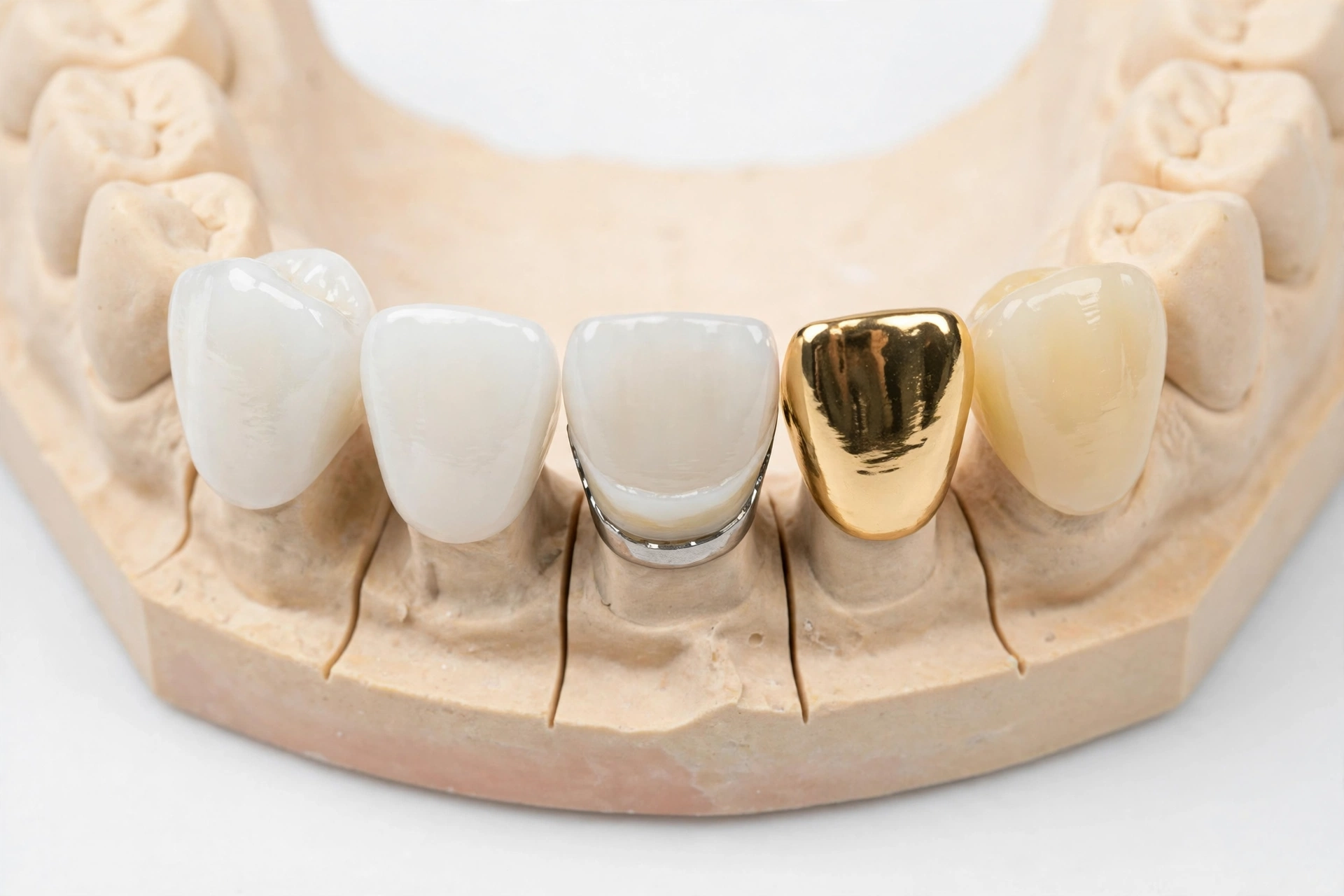
Not all dental crowns are made the same way. The right material depends on the tooth’s location, how much force it takes when you chew, and how visible it is when you smile. Here are the five main types:
1. Porcelain (All-Ceramic) Crowns
Porcelain dental crowns are the most natural-looking option. They mimic the translucency of real enamel, making them the top choice for front teeth. They are also metal-free, which matters for patients with metal sensitivities. The tradeoff is that porcelain can chip under very heavy bite force, so dentists are more selective about using them on back molars.
2. Zirconia Crowns
Zirconia is a high-strength ceramic that has become one of the most popular crown materials in recent years. Zirconia dental crowns are much tougher than traditional porcelain while still looking very close to natural teeth. They are a common choice for molars, where strength matters most, and many dentists now consider zirconia the best all-around balance of strength and appearance.
3. Porcelain-Fused-to-Metal (PFM) Crowns
PFM crowns combine a metal base for strength with a porcelain outer layer for looks. They have been used for decades and hold up well on back teeth. Over time, a thin dark line can sometimes appear at the gumline as gums recede, which is why they are less common for highly visible front teeth today.
4. Gold and Metal Alloy Crowns
Gold crowns and other metal alloy dental crowns rarely break or chip, and they require the least amount of tooth to be removed. Their obvious downside is color – they are impossible to miss. Because of that, they are usually reserved for out-of-sight molars, especially in patients who grind their teeth.
5. All-Resin Crowns
Resin crowns are the most affordable option, but they wear down faster and are more prone to fractures than the other materials. They are sometimes used as temporary crowns while a permanent one is being made, rather than as a long-term solution.
When Do You Actually Need a Dental Crown?
Dentists recommend dental crowns in several specific situations:
- After a root canal: A tooth that has had a root canal is more brittle without its living pulp inside. Back teeth in particular usually need a crown after a root canal to protect them from cracking under chewing force.
- A cracked or fractured tooth: A crown holds the pieces together and prevents the crack from spreading.
- A very large filling: When decay or damage is so extensive that a filling alone can’t support the tooth, a crown is generally the stronger choice once a filling would cover more than about half the tooth’s width.
- A worn-down tooth: Grinding or acid erosion can wear teeth flat; crowns rebuild their height and function.
- Cosmetic reasons: Severely discolored or misshapen teeth can be covered with a crown for a natural look.
- To top a dental implant: The visible “tooth” part of an implant is a crown. (At our practice, we handle implant restorations – the crown itself – while surgical implant placement is referred out to a specialist.)
Dental Crown vs. a Large Filling: How Does Your Dentist Decide?
This is one of the most common questions patients ask, and the answer comes down to how much healthy tooth structure is left. A filling sits inside the tooth and relies on the surrounding walls for support. A crown wraps around the entire tooth and protects it from the outside.
As a rule of thumb, small to medium cavities do well with tooth-colored fillings. Once the damage is extensive – a deep crack, a tooth weakened by root canal treatment, or decay that undermines the cusps – a crown is the safer long-term call. Your dentist will show you on the x-ray exactly where the line is for your tooth.
How Long Do Dental Crowns Last?
With good oral hygiene and regular dental visits, most dental crowns last 10 to 15 years, and many last well beyond that. What wears them out is the same thing that wears out natural teeth: decay at the margin where the crown meets the tooth, gum disease, and habits like grinding or chewing ice.
You can extend a crown’s life by brushing twice a day, flossing daily (yes, you still floss around a crown), wearing a night guard if you grind your teeth, and keeping up with your regular checkups so your dentist can catch small problems early.
What to Expect at Your Crown Appointment
Getting dental crowns usually takes two visits. At the first visit, your dentist numbs the area, shapes the tooth, and takes a digital scan or impression. You’ll leave with a temporary crown. At the second visit, usually a couple of weeks later, the permanent crown is checked for fit, color, and bite, then cemented into place.
Some offices offer same-day crowns milled in-office from a digital scan. Ask whether that’s an option for your case – not every tooth or material qualifies.
Taking Care of Your New Crown
A crowned tooth needs the same care as a natural one, with one extra rule: don’t use it as a tool. Avoid chewing ice, biting fingernails, or opening packaging with your teeth. If you notice the crown feels high when you bite, or it comes loose, call your dentist promptly – a quick adjustment prevents bigger problems. For urgent issues, our crowns and bridges team can help.
The Bottom Line
Dental crowns are a proven, versatile way to save damaged teeth and keep your smile intact. The best material and timing depend on your specific tooth, which is why a conversation with your dentist matters more than any article. If you’ve been told you might need one – or you’re wondering whether that cracked tooth qualifies – call DNTL SPOT at (516) 226-9160 to schedule a visit. For more on keeping restored teeth healthy, the American Dental Association’s guide to crowns is a solid patient resource.
(516) 226-9160 – Mon & Wed 9 AM-5 PM, Sun 9 AM-3 PM