
Most people don’t spend much time thinking about root canals. Then one tooth starts acting up – a zing of pain with morning coffee, an ache that shows up out of nowhere at bedtime – and suddenly the question feels urgent. If that sounds familiar, this guide is for you. We’ll walk through the most common signs you need a root canal, what they usually mean, and what to do next.
One thing worth knowing up front: needing a root canal is not a failure. Teeth get deep cavities, cracks, and injuries, and spotting the signs you need a root canal early is simply good dental care. A root canal simply treats the soft tissue inside the tooth so you can keep the tooth itself. The American Dental Association notes that root canals are used to repair and save a tooth instead of removing it – which is almost always the better outcome.
On Instagram, our team shared a short reel explaining that a root canal is about saving your natural tooth, not losing it:
https://www.instagram.com/reel/DXW5OVcjGIO/
What a root canal actually treats
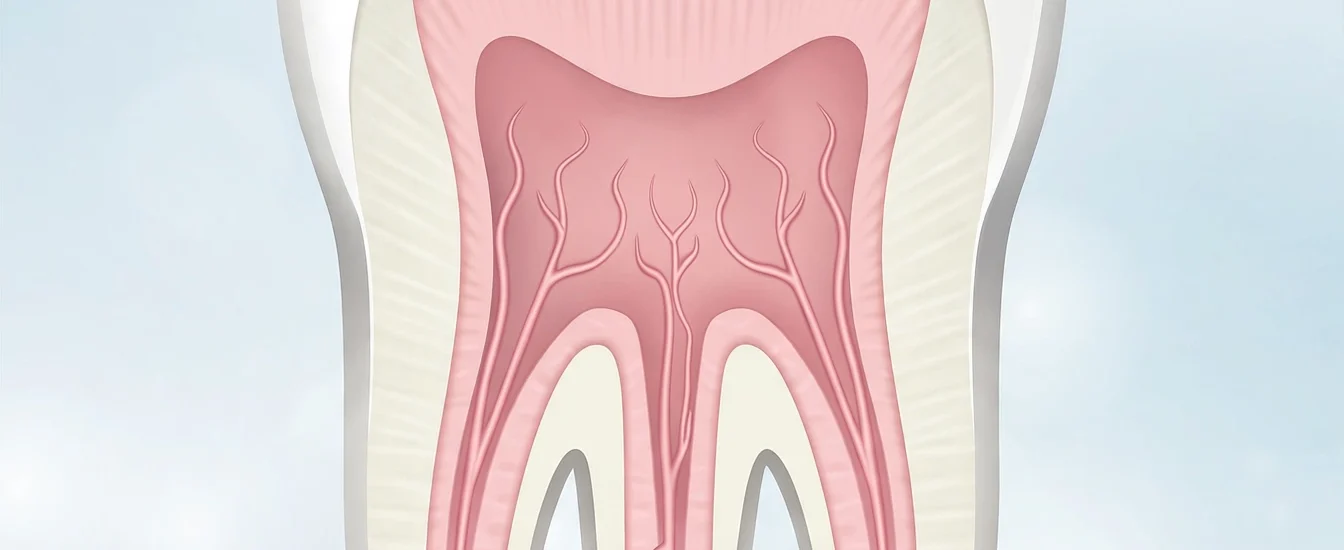
Inside every tooth is a small chamber of soft tissue called the pulp, which holds the tooth’s nerves and blood vessels. When the pulp gets infected or badly irritated – from a deep cavity, a crack, repeated dental work, or even a bump to the tooth – it can’t heal on its own the way a cut on your skin does.
A root canal removes that damaged tissue, cleans the inside of the tooth, and seals it back up. Keeping that picture in mind makes the signs you need a root canal much easier to recognize in your own mouth.
You can read more about how the treatment works on our root canal treatment page. But first, here are the symptoms that most often bring patients in.
The 7 signs you need a root canal, explained
1. Hot or cold lingers long after the sip
A little sensitivity to ice cream or hot coffee is common and often harmless. The pattern that matters is lingering pain – you take a sip, and the ache hangs around for 30 seconds or more after the temperature is gone. That lingering response is one of the classic signs you need a root canal, because it suggests the nerve inside the tooth is struggling to recover.
2. A toothache that shows up on its own
Pain that arrives without any trigger – no food, no temperature, no pressure – deserves attention, especially if it wakes you up at night. Teeth have a way of complaining loudest when you lie down and everything gets quiet. Spontaneous, throbbing pain that comes and goes on its own schedule is one of the clearest signs you need a root canal, and it rarely improves by waiting.
3. It hurts to chew or even touch the tooth
If biting down on one specific tooth sends a sharp jolt, or the tooth feels tender when you tap it lightly with a fingertip, the tissue around the tooth’s root may be inflamed. Sometimes this comes with a feeling that the tooth sits “higher” than its neighbors. Sensitivity to pressure is another of the common signs you need a root canal – and it’s also a good reason to stick to soft foods on that side until you’ve been seen. An x-ray will confirm what’s really going on inside.
4. A small bump on the gum that keeps coming back
Every so often a patient notices a little pimple-like bump on the gum near a sore tooth. It may fill, drain, and disappear, then return again. Dentists call this a fistula, and it’s essentially a pressure valve: infection at the tooth’s root is draining through the gum.
The bump itself usually doesn’t hurt much, which is exactly why people ignore it – but it’s one of the more reliable signs you need a root canal, because it points to an infection that won’t resolve on its own.
5. Swelling or tenderness around one tooth
Gums that are puffy, tender, or swollen around a single tooth – rather than along the whole gumline – often trace back to that tooth’s root. Mild, localized swelling can sit quietly for a while. Swelling that spreads to the cheek or jaw, or swelling paired with a fever, is a different story: call us right away, because that kind of infection can move quickly. (More on that below.)
6. The tooth has darkened in color
A tooth that slowly turns gray or dark compared with its neighbors may have a pulp that has been injured or died – sometimes from an old bump or fall that you barely remember. Discoloration alone isn’t always painful, and it isn’t always one of the urgent signs you need a root canal, but it’s worth having checked. An x-ray tells us quickly whether the nerve is still healthy or the tooth needs treatment.
7. A deep cavity or crack that won’t settle down
Sometimes the story is straightforward: you know the tooth has a large old filling, a visible crack, or decay your dentist has been watching. When that tooth starts aching – or an ache you hoped was “just sensitivity” keeps getting louder over weeks – the decay or crack has likely reached the pulp. At that point a filling can’t fix it, and the two realistic options are a root canal or losing the tooth.
What happens if you wait?
Here’s the calm, honest version: pulp infections don’t get better with time. Sometimes the pain even fades for a while, which feels like good news but usually means the nerve has died – while the infection keeps spreading into the bone around the root. Waiting tends to turn a straightforward root canal into a bigger problem: an abscess, swelling, or a tooth that can no longer be saved and has to come out.
Most teeth that end up extracted showed the early signs you need a root canal weeks or months beforehand – they simply went unanswered.
None of that is meant to frighten you. It’s simply why we’d rather see you early, when the fix is smaller. If any of the signs you need a root canal listed above sound familiar, an exam and an x-ray will give you a clear answer – and often, real peace of mind.
What the appointment is actually like
If you’ve heard root canal horror stories, they’re mostly outdated. With modern anesthesia, the appointment feels a lot like getting a filling: the area is numbed, the damaged tissue is removed, the inside of the tooth is cleaned and sealed, and a temporary filling protects it until your follow-up. Most root canals take one to two visits, and the toothache that brought you in is typically gone afterward.

One thing to expect: back teeth usually need a dental crown afterward to protect them, since a tooth without its pulp is a bit more brittle. We’ll walk you through that at your visit so there are no surprises.
And if dental visits make you nervous in general, tell us – easing anxious patients through treatment is something we do every day. You’re in sisterly hands here.
When to call right away
Most toothaches can wait for the next available appointment. A few can’t:
- Swelling that’s spreading to your cheek, jaw, or neck
- A toothache paired with a fever
- Severe pain that over-the-counter medicine doesn’t touch
- Swelling that makes it hard to swallow or open your mouth fully
Those go beyond the everyday signs you need a root canal – they signal an infection that needs prompt attention. We keep same-day emergency slots for exactly this reason – and yes, we’re open Sundays 9 AM to 3 PM, because toothaches don’t check the calendar.
The bottom line
The signs you need a root canal are your tooth’s way of asking for help: lingering hot-and-cold pain, spontaneous aching, pain when you chew, a recurring gum bump, one-sided swelling, a darkening tooth, or a deep cavity that won’t calm down. Not every one of these means a root canal – only an exam and an x-ray can say for sure – but every one of them means it’s time to be seen.
We’d love to be the ones who sort it out for you.
Book Your Root Canal Evaluation
Or call (516) 226-9160 – Sun 9 AM–3 PM, Mon & Wed 9 AM–5 PM.