
Elevate your smile. Enjoy an exclusive $150 off our professional teeth whitening.

Teeth Whitening vs Veneers: 5 Key Differences Explained

Procedural comparison of teeth whitening vs veneers at DNTL SPOT in Hewlett, NY

Many patients visit DNTL SPOT asking about teeth whitening vs veneers when what they truly desire is a complete smile transformation. While both treatments result in a brighter smile, they solve very different problems. Whitening changes the color of your natural teeth. Veneers change the color and the shape of the front surface of a tooth.

Whether you want to lift coffee stains or fix a chipped tooth, understanding teeth whitening vs veneers is the first step toward your dream smile. This guide explains how each option works, what it costs, how long it lasts, and who it suits best, so you can decide with clear, honest information.

Teeth Whitening vs Veneers: How Professional Whitening Works
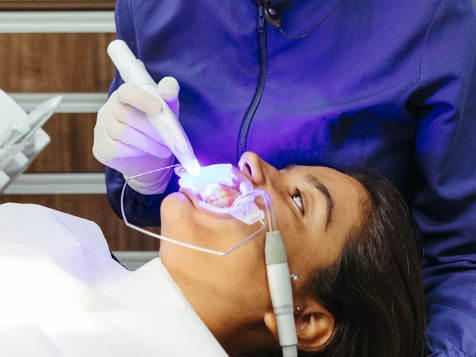
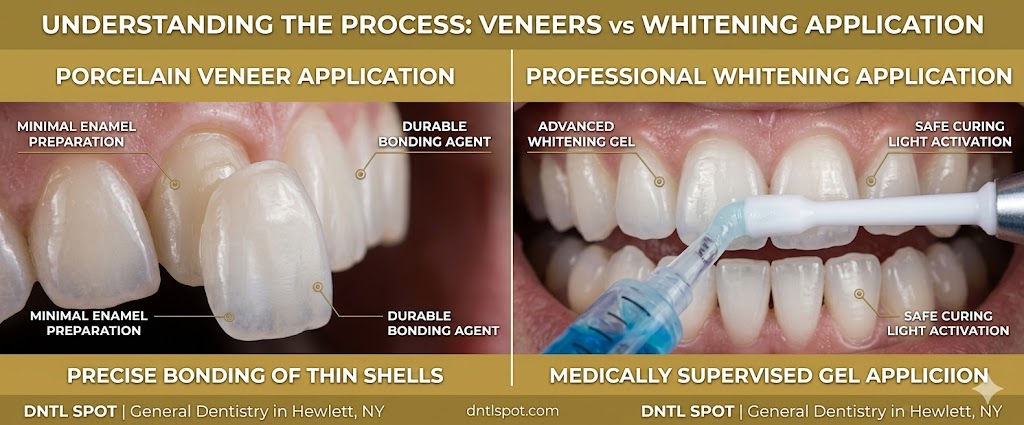
Teeth Whitening vs. Veneers compared at DNTL SPOT in Hewlett, NY Professional whitening lifts stains from natural tooth enamel. At DNTL SPOT, we apply a high-concentration whitening gel and activate it with a specialized curing light. The gel breaks down deep stains from food, drinks, tobacco, and aging, without removing or altering the structure of the tooth. Unlike over-the-counter strips, in-office whitening is supervised from start to finish. We protect your gums, examine your enamel, and confirm you are a good candidate before we begin. Most appointments take about 1-2 hours, and the change is visible the same day. You can read more about our Zoom teeth whitening in Hewlett, and the ADA explains more about teeth whitening at MouthHealthy.org.

A quick note on sensitivity: some patients feel mild, temporary sensitivity during or shortly after whitening, and it usually fades within a day or two. If your teeth are already sensitive, tell us before we start. We can adjust the treatment, pace the gel application, and suggest simple ways to keep you comfortable during and after your visit.

How Veneers Work
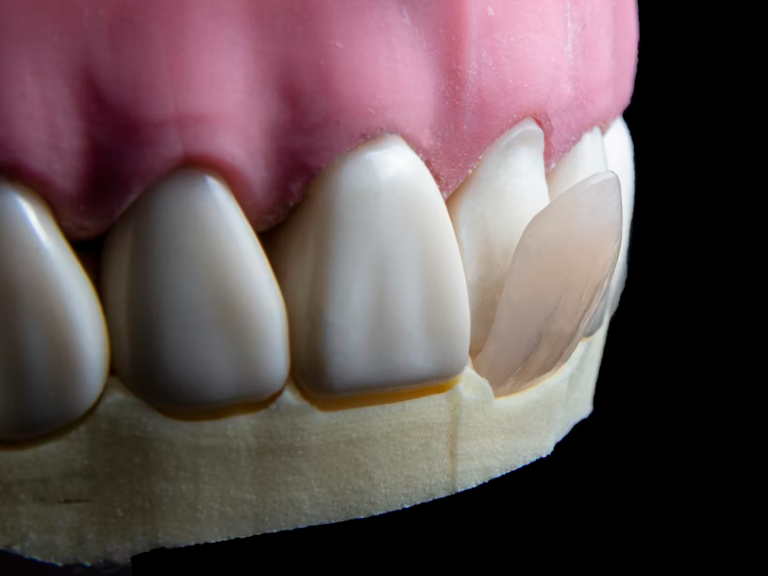
Choosing between Teeth Whitening vs. Veneers for a brighter smile Porcelain veneers are ultra-thin shells custom-crafted to fit over the front of your teeth. They cover the visible surface, so they can change a tooth’s color, shape, and size at the same time. The process involves minimal preparation of the enamel, followed by a medical-grade bonding agent to ensure a durable, long-lasting result. Unlike whitening, veneers allow you to choose your ideal shape, size, and shade of white. Treatment usually takes 2-3 appointments, including planning, preparation, and final bonding. The ADA explains more about veneers at MouthHealthy.org.

Here is how the visits usually go. At the first appointment, we plan the shape and shade with you, prepare the teeth, and take impressions or digital scans for the dental lab. You wear temporary veneers while your custom porcelain veneers are made. At the final visit, we bond each veneer in place and make small adjustments, so your bite feels natural and your smile looks like you.

FEATURE
TEETH WHITENING
PORCELAIN VENEERS
Primary Goal
Brighten natural color
Transform shape and color
Fixes Gaps?
No
Yes
Fixes Chips?
No
Yes
Procedure Time
1-2 hours (in-office)
2-3 appointments
Longevity
6-12 months (varies)
10-15+ years

Teeth Whitening vs Veneers: Cost, Longevity, and Who Each One Suits

At DNTL SPOT, we help patients from Hewlett, Woodmere, and the Five Towns achieve their smile goals with personalized cosmetic plans. Here is how the two options compare on the points patients ask about most: cost, how long the results last, and who each treatment suits best. Cost. Whitening is the lower-cost option. Our in-office Zoom whitening is $450 (regular $600), and it brightens your natural teeth in a single visit. Veneers cost more per tooth, because each veneer is custom-made for one tooth and bonded in place over 2-3 appointments. The exact cost of veneers depends on how many teeth you treat and the result you want, which is why we confirm it with you after an examination, before any treatment begins. How long each lasts. Whitening results typically last 6-12 months, and with good habits many patients enjoy them for one to two years before a touch-up. Coffee, tea, red wine, and tobacco shorten that time, because whitening does not change how enamel picks up new stains. Porcelain veneers last much longer, usually 10-15 years or more. They are cared for like natural teeth, with daily brushing and flossing and regular checkups, and when a veneer eventually wears out, it can be replaced. Who each one suits.
  • Choose Whitening if: Your teeth are straight and healthy, but you want a boost in brightness for a special event or daily confidence.
  • Choose Veneers if: You are unhappy with the actual structure of your smile (gaps, crookedness, or worn-down edges) or if you have chips or a shade that whitening cannot reach.
Not sure which one fits you? At your consultation we examine your teeth, talk through your goals, and recommend the option that matches, with no pressure to decide on the spot.

The Honest Bottom Line

So, which one should you choose? Here is our honest advice. If your teeth are healthy, straight, and in good shape, and the only thing that bothers you is the color, whitening is the simpler first step. It is gentler on your teeth, costs less, and can brighten your smile in a single visit. Many patients start there and find it is all they needed. Veneers make more sense when color is only part of the problem. If your teeth are also chipped, gapped, worn down, or uneven, veneers can fix the shape and the shade together, where whitening can only change the color. Some patients do both. If you plan to get veneers later, it is usually best to whiten first, then match the veneer shade to your newly brightened teeth, because veneers do not whiten after they are placed. And if crooked or crowded teeth are your main concern, straightening may come before either option. Our Invisalign clear aligners in Hewlett can move teeth gently into place, and members save $500 on treatment. After straightening, many patients finish with whitening for a complete result. One more honest point: neither option is right for every mouth. Whitening works on natural enamel, so it will not change the color of old crowns, fillings, or veneers. And veneers are a long-term commitment, because a small amount of enamel is reshaped to make room for them. We will explain both points clearly before you decide, so there are no surprises later. Whichever you choose, simple daily habits protect your result. Brush twice a day, floss daily, and keep up with regular cleanings. Limit coffee, tea, and red wine right after whitening, when teeth stain most easily. Small habits like these help both whitening and veneers last as long as possible. Still unsure? That is exactly what a consultation is for. We will look at your teeth, listen to your goals, and tell you honestly which option fits, with no pressure either way.

One last practical note: at your consultation we map out the full cost of each option in writing before you decide, so there are no surprises later. Many patients also join the DNTL SPOT membership plan at $359/year, which covers routine preventive care and includes member savings such as $500 off Invisalign. Take the information home, think it over, and book when you are ready. There is never any pressure to start treatment the same day.

Is teeth whitening permanent?

No, results typically last 6-12 months depending on lifestyle.

Can veneers fix crooked teeth?

Yes, veneers can correct minor alignment issues, gaps, and chips without braces.

Do veneers stain like natural teeth?

No, porcelain is highly stain-resistant compared to natural enamel.

Which Treatment Is Right For You? Book A Consultation

Or call (516) 226-9160

You may also like these